Why Homes Near the Square Are In Demand
The Downtown Fayetteville Historic Square was listed on the National Register of Historic Places on August 27, 1974, and the surrounding neighborhoods have stayed some of Fayetteville's most walkable and sought-after — close to century-old commercial buildings like the 1911 Old Post Office and the 1908 Lewis Brothers Building, and to the Fayetteville Farmers' Market that runs every Saturday from April through November. That combination of history and walkability is exactly why homes near the Square attract both downsizing sellers looking to simplify and investors looking to flip — and why the debris side of either project deserves real planning.
The Downsizing Timeline: Room by Room
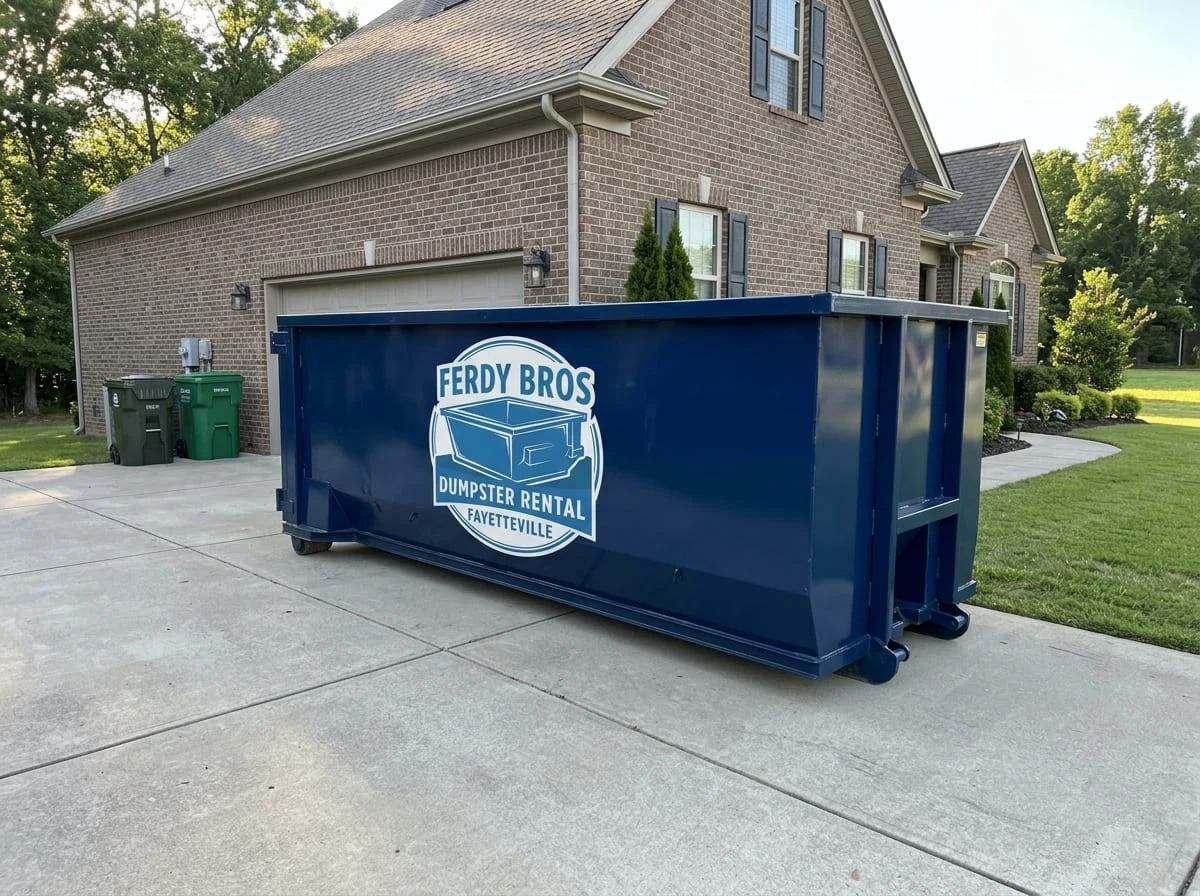
Downsizing out of a longtime home works best broken into stages rather than tackled all at once. Start with the rooms that carry the least emotional weight — garage, attic, storage closets — before moving into bedrooms and living spaces where decisions take longer. Sort into keep, donate, sell and dispose piles as you go, and don't wait until everything's sorted to book a dumpster; a container on-site from the start gives you somewhere to put the "dispose" pile the moment you make the call, rather than letting it accumulate in a hallway or garage for weeks.
The Flip Timeline: Demo to Debris to Done
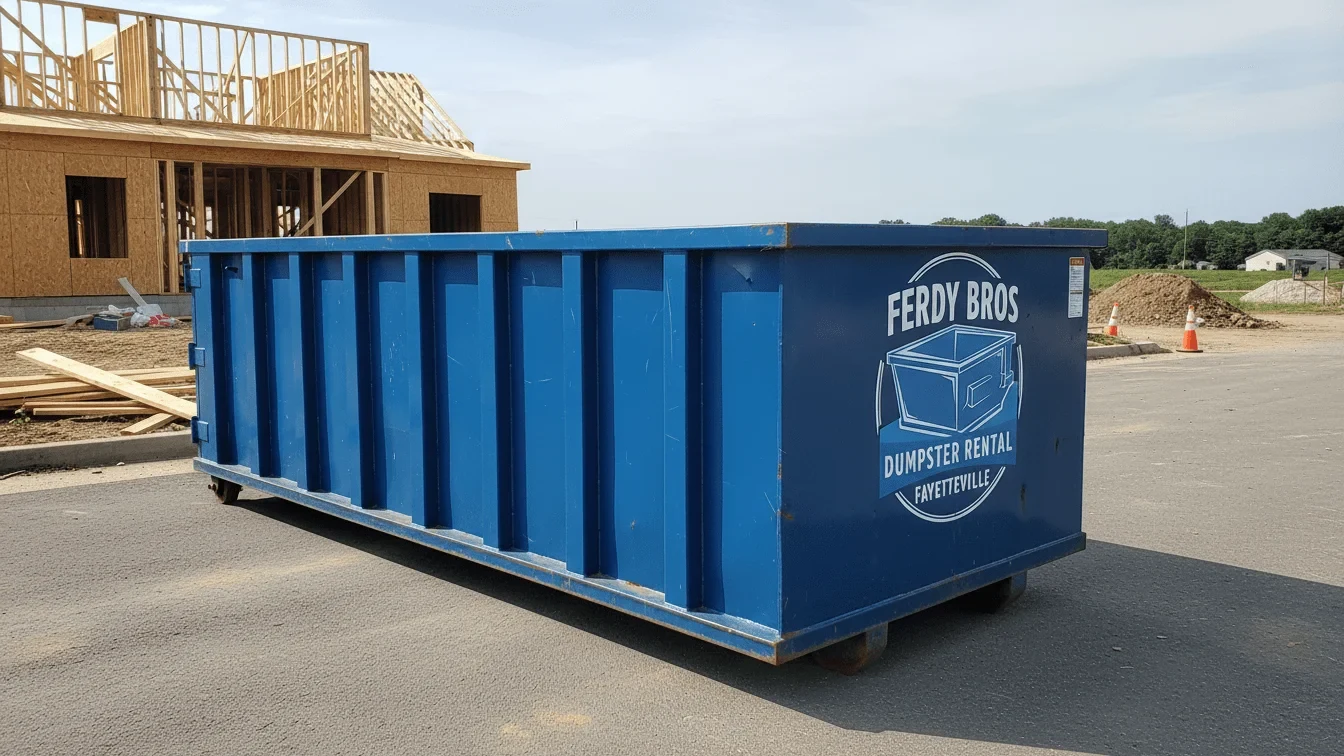
A flip runs on a tighter, more construction-driven timeline. Initial demo and gut-out debris (old flooring, cabinetry, fixtures, drywall) is usually the heaviest and fastest-generated phase — often filling a container within the first days of work. That's typically followed by a quieter mid-project stretch during framing and systems work, then a second, lighter debris wave during finishing (packaging, trim offcuts, paint materials). Most flips near the Square do best with an initial larger container for demo, followed by a smaller pickup-service container for finishing debris, rather than one container sized for the whole project sitting half-empty for weeks in the middle.
Working Around a Historic Downtown Street
Streets near the Square tend to be older and narrower than a typical suburban block, with limited off-street parking and, depending on the block, real foot traffic from downtown businesses and the Farmers' Market. That means container placement needs more thought here than on a wide suburban driveway — where exactly the container sits, how it affects street parking or sightlines, and how long it realistically needs to stay before the next phase of work begins are all worth discussing before delivery day rather than after.
Getting the Container Right for Either Job
Whether you're downsizing a home you've lived in for decades or flipping a property near downtown on a tight investor's timeline, the sizing conversation is the same: tell us what's coming out, roughly how many rooms or how much square footage, and what the street and driveway situation looks like. From there we'll size a container — or plan a sequence of containers, for a multi-phase flip — that matches the actual pace of the project instead of guessing at a single size and hoping it fits the whole job.